booklog - Grant Custer
The Glass Bead Game

The Glass Bead Game

by Herman Hesse

finished · 1943 · ★★★★ · ISBN: 9780805012460
Started: 2026-02-06T05:00:00.000Z · Finished: 2026-03-12T04:00:00.000Z
4 posts
The Glass Bead Game
Monday, February 16th 2026 at 8:39 PM
The Glass Bead Game by Herman Hesse
Like Anathem, I think of this as a monk tech book. Dealing with folks who had made choices about how to manage attention. The idea of a game, based on music and math, where you play with ideas, positioning them in sequence (intentionally left vague) is suggestive to me in a world of embeddings. It also makes me think about how books serve as ways of containing ideas - traditions also - so that they can be organized as position in relation to each other.
The Glass Bead Game
Sunday, March 1st 2026 at 9:07 AM
The Glass Bead Game by Herman Hesse
Returning to this after finishing "on the way to a small angry planet". This one is not an easy read but it's almost intriguing in that I don't know exactly what it's up to. Trying to put forward some philosophical ideas for sure, but in such a layered way. A fictional tale of a society as a famous figure, with lots of asides about "of course you already know" or "you may be anticipating" . Does this help the point somehow? It's fun. I wonder what accounts are actually like that - gospels related to Jesus I guess a little bit. Also feels very Borges - I guess they were publishing around the same time. It's all in the service of worldbuilding I suppose. It's really a worldbuilding book. Where that world is an argument - having to do with World War 2 I think? I'll read more about the context when I finish, another thing to kind of ambiently puzzle about as I read for now.
The Glass Bead Game
Tuesday, March 10th 2026 at 5:51 PM
The Glass Bead Game by Herman Hesse
I finished the main part of the book yesterday. I think I'm going to try and finish the alternate lives section as well, I skipped that when I read many years ago. First of all, a great book to read while you're trying to build a meditation habit. The portrayal of the usefulness of meditation really jazzes you up to keep going. It was towards the end that I really started to see the argument about intellectuals and what they should do. My rough reformulating it is: should intellectuals be participating in the world, or is their value in them standing apart and therefore showing an alternative system of values. I did think a bit about how categories have collapsed a lot into influencers. Especially when the relative vow of poverty - Castalians will be taken care of (they're safe from hunger) but there's no hope of riches. Now I think, because you can monetize influence to an extent, monetize attention, the money you can bring in serves as a score marker for your influence. Or at least it feels silly (or incompetent?) to not capitalize on it to some degree. Versus the discourse of "selling out" for musicians when I was young... Which is all what it is, and to some extent I think due to less gatekeeping, but it does retrench capitalism as sort of "the system". Even universities, the closest analog to Castilia today (or is it the Catholic church I guess?) gets dragged into capitalism. It doesn't really feel like a book from the 1940s (could be newer), although it being all male feels the most outdated (Anathem makes mixed gender monks feel pretty natural). The idiosyncracies of the narration - being positioned as an account of a life we had already heard bits of in legend - continued to be striking and strange. I trusted it was to an effect but I'm not sure what the effect was it exactly. But I was glad to let it ride. It always felt very confident it what it was doing. The ending of the main narrative was a thrill - that's where the naration did feel something like a piece of music, playing with tempo to create an effect.
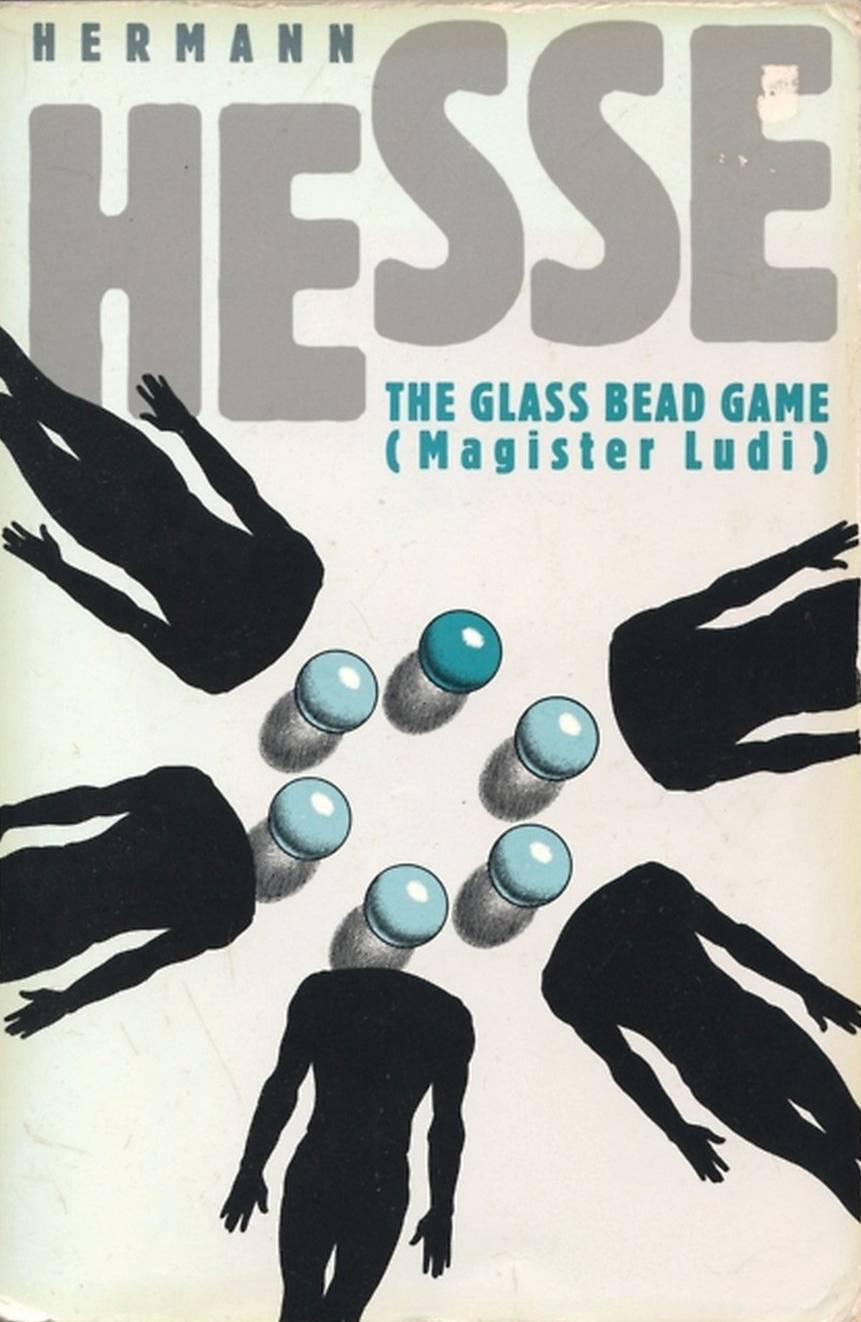
The Glass Bead Game
Thursday, March 12th 2026 at 8:44 PM
The Glass Bead Game by Herman Hesse
I finished the three lives (and therefore the full book) today. They were easy to read once I got into each one. I'm glad I read them. Taken together with the book they really seem to be an argument for meditation. Which I suppose is also an argument for a separation from the world and ambition. Although then it seems strange that the final story (the Indian setting) is of forking from the path of the world into a hermit's isolation. Where the main story ends with the importance of a return to the world. Again the narrative setup complicates things. If I remember right the idea is that the three lives are Knecht's dissertation as a student. So they represent his views then, and could therefore be the argument he was making for himself then? But there is enough in there that is not 'a perfect life' or even flattery of him as an individual - there is a lot that acknowledges that while some things would be constant his life could be quite different depending on when and where he was born - that we're not supposed to read them directly against the grain. Again I don't know quite what the narrative framing is up to, but the nuances of it are in themselves enjoyable, and maybe just suggest that it's impossible to untangle everything. The ending of the main part still sings - the abruptness of that end but it being with a person who had achieved some of their purpose - it does feel like a note struck and then ringing out and you feel it more for it being the last time struck (not followed up by others). A fun book! Again I'll say i t really makes you want to commit to meditation. It has something broader to say about the role of intellectual but I think that is more complicated. I don't know if I have a good handle to sum that up. Maybe just 'do meditation but also stay involved in the world, don't retreat entirely,